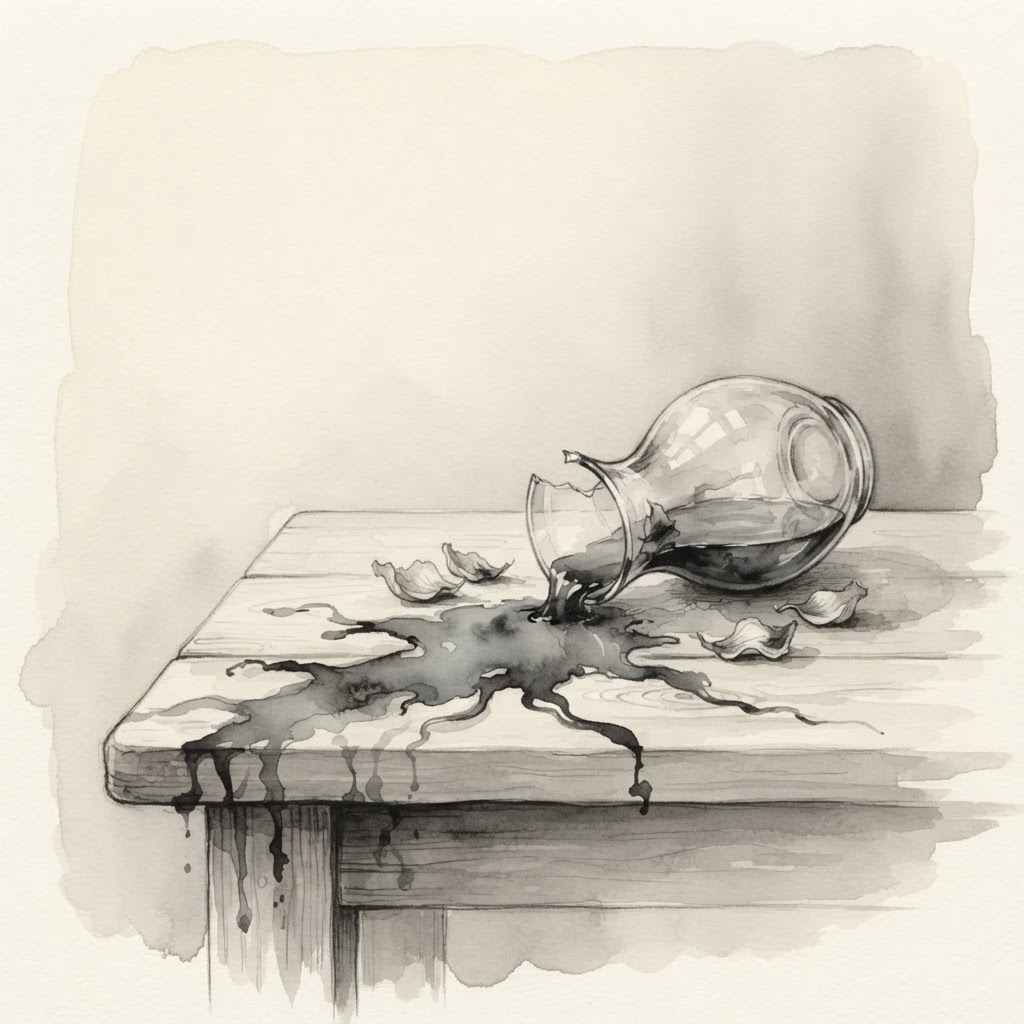
There is a point in some situations where you can only keep your feelings inside for so long. You can try to stay calm, you can try to explain yourself, and you can try to convince yourself that something doesn't bother you as much as it actually does. But eventually, something gives.
Maybe it comes out as anger. Maybe it comes out as an argument. Maybe it is simply the moment when you finally admit something that you've been trying not to acknowledge.
I think these songs capture that point for me. They aren't necessarily about one specific kind of emotion. They are about what happens when everything you've been holding onto finally starts coming out, whether that means anger, frustration, hurt, or simply the need to finally say what you've been thinking.
Revolving Door — Tate McRae
Again, I really like the production on Revolving Door, but the part that stands out to me the most is the bridge. I especially like that section when it is put on a loop because it feels like the emotional peak of the song. The entire song has a strong beat and a consistent energy to it, but something about the bridge feels different. It almost sounds like an angry declaration, even though the actual sound doesn't change dramatically. There is just more emotion behind it, like the person singing has reached the point where they can't hold everything in anymore.
The way I imagine it is almost like a passionate argument or fight. There is all this built-up frustration finally coming out, and for a moment, everything feels intense and almost explosive. Maybe both people have been holding things back for a long time, or maybe one person has finally reached the point where they can't keep pretending everything is fine.
Then, almost as quickly as the confrontation reaches its peak, it gives way to the repeated "I need a minute" section. That feels like the emotional aftermath of the confrontation. It's calmer, almost like the person has finally gotten everything out and now needs a moment to breathe and process what just happened.
That contrast is probably what I like most about the bridge. It feels like going from an emotional breaking point into the quiet that follows it. The anger and passion are still there, but they have burned themselves out enough that all that is left is someone trying to collect themselves.
I also like that the song doesn't make the argument feel completely one-dimensional. Anger can be incredibly intense in the moment, but once everything has been said, you still have to deal with what you actually said. You have to sit with the fact that something that was inside your head is now out in the world and cannot simply be taken back.
That makes the transition into "I need a minute" feel even more appropriate. Sometimes you don't need another argument. You need time to understand what just happened.
In My Room — Julia Wolf
In My Room is another song that I mostly connect with because of the overall vibe and sound. I especially love edits that use both the regular and acoustic versions of the song because of the contrast between them. The regular version feels much more intense and aggressive, while the acoustic version brings out something softer and more vulnerable.
I really like that dichotomy because it reflects how complicated our emotions can be when dealing with the same event. You can feel angry and frustrated about something while also feeling hurt, sad, or vulnerable because of it. Those emotions don't necessarily contradict each other. They can exist at the same time, even if they come out in completely different ways.
That is what I think makes using both versions in an edit so effective. The same lyrics and the same underlying story can suddenly feel completely different depending on how they are presented. One version can capture the anger and intensity of an experience, while the other captures the quieter sadness underneath it.
I think that is something we sometimes forget about anger. It can look like the primary emotion, but there is often something underneath it. You might be angry because someone hurt you. You might be frustrated because you feel misunderstood. You might be lashing out because admitting that you're actually sad feels much harder.
The acoustic version makes me think about that quieter side of the emotion. Once the intensity has faded, what is left? Sometimes it is sadness. Sometimes it is disappointment. Sometimes it is vulnerability.
And sometimes it is all three.
That is why I like the contrast between the two versions so much. They aren't really telling different stories. They are showing two different ways of experiencing the same story.
One version is what you might say when you're angry.
The other is what you might admit when you're finally alone with your thoughts.
bloodstream — Alyssa Grace
bloodstream is another song I discovered through TikTok. The lyrics that stand out to me are "And I'm crying on my mama's floor, why don't you want this anymore?/And I'm craving you to change for me," followed by the response, "I hear you, and I love you, but my heart, it hurts for you / And I just cannot give you what you need."
I really like the emotional contrast between those lines because neither person necessarily seems to be the villain. One person desperately wants the other to change and to give them what they need, while the other person understands their pain but knows they cannot become that person for them.
That makes the song feel much more complicated than simply one person hurting another.
I imagine a scene where two people are having a huge fight and eventually start saying things that are genuinely hurtful. In the heat of the moment, the words come out before either person has really thought about what they are saying. Then, almost immediately, they realize they regret it.
They know they crossed a line, but the words have already been said.
You can apologize, but you can't completely take them back. Sometimes certain things said during an argument stay with you even after the anger has disappeared. You can explain what you meant, apologize for how you said it, or try to make things right, but you can't erase the fact that the other person heard those words.
I also imagine what comes after a fight like that: the distance, the silence, and the time spent apart where neither person is necessarily ready to come back, but both are forced to sit with what happened and reflect on their own part in it.
That separation could last months or even years. During that time, both people grow independently and become more aware of their own mistakes. They start to understand not only what the other person did wrong, but what they themselves did wrong too.
Eventually, I picture them finding their way back to each other. Not necessarily pretending that the time apart never happened, but acknowledging that maybe it needed to happen. They needed that distance to become the people they are now.
There is something bittersweet about realizing that the relationship might not have worked back then, but that the separation gave both of them the opportunity to grow into people who might finally be able to make it work now.
I think that is what makes bloodstream particularly interesting to me. The conflict isn't necessarily about one person being right and the other being wrong. Sometimes two people can genuinely care about each other and still be unable to give each other what they need.
When Everything Comes Out
These three songs approach emotional confrontation from different directions.
Revolving Door captures the moment when built-up frustration finally becomes an argument, followed by the quiet of trying to process what just happened. In My Room shows how the same experience can contain both anger and vulnerability, depending on how you allow yourself to express it. And bloodstream takes the idea further, imagining what happens when an argument becomes serious enough that the people involved need real distance before they can understand what happened.
What connects them is that none of these emotions exist in isolation.
Anger can come from hurt. Frustration can come from disappointment. An argument can come from wanting someone to understand something that you haven't been able to explain. And sometimes the thing that comes out during a fight is something you genuinely feel, but not necessarily something you actually wanted to say in that particular way.
I think that is why the aftermath of an argument can be almost as emotionally significant as the argument itself.
During the argument, everything is immediate. You are reacting to what is happening right then. You are trying to make yourself heard, and sometimes that means speaking before you've had the chance to think about the consequences.
Afterward, there is nothing left to react to.
There is just silence.
And in that silence, you have to think about what you actually meant, what the other person meant, what you said, and what you wish you hadn't said.
Sometimes that reflection makes you realize that you were right to be angry.
Sometimes it makes you realize that you weren't.
Sometimes it makes you realize that both of you were hurt and both of you contributed to what happened.
And sometimes the only way to figure that out is to step away from the situation for a while.
That is the part of these songs that interests me most. They aren't simply about emotions becoming explosive. They're about what happens when the explosion is over.
Because eventually, the anger fades.
The adrenaline disappears.
The room gets quiet.
And then you're left with whatever was underneath it all along.