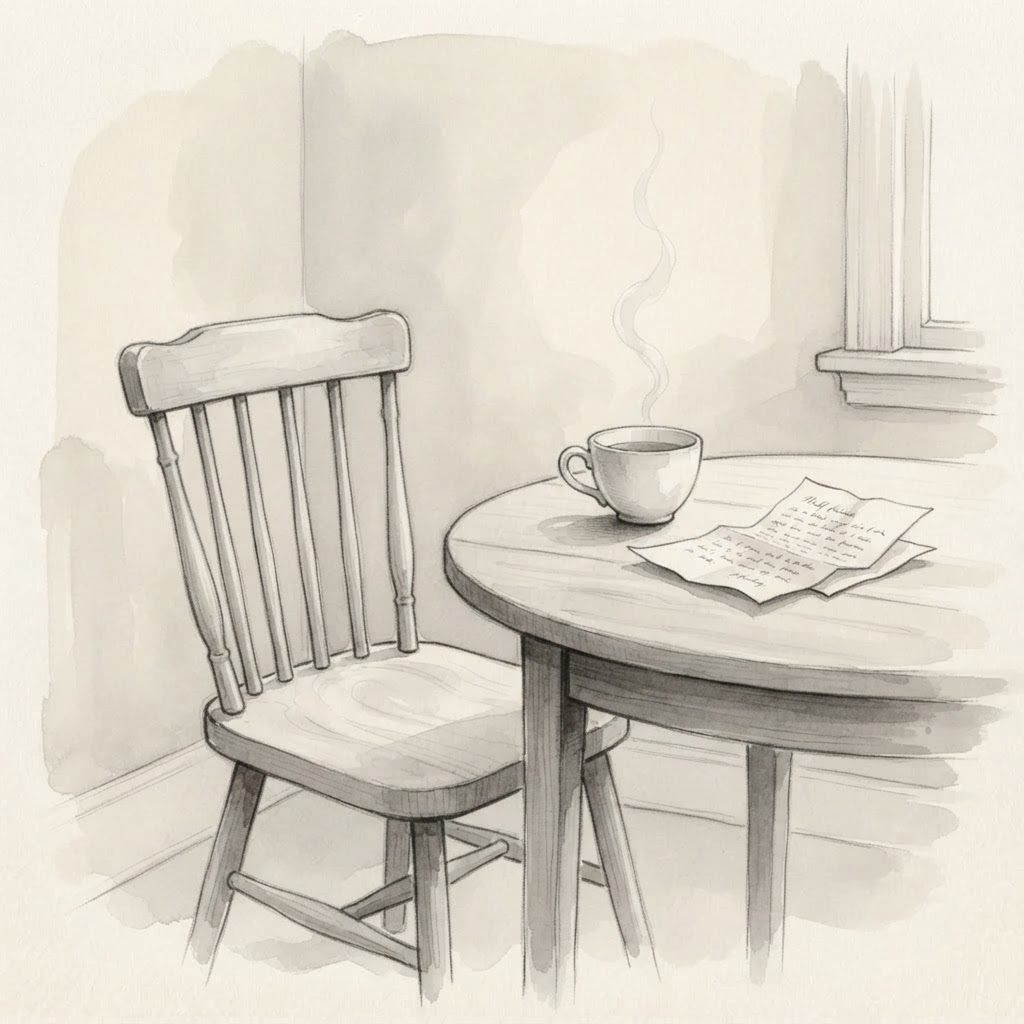
There is a point after something happens when there isn't really anything left to do. The conversation has happened, the relationship has changed, the person has left, or you've finally realized something you had been avoiding. You can't go back and change what happened, but you also aren't necessarily ready to move forward yet. Instead, you are left sitting with it.
I think that is what connects these four songs for me. They aren't really about the initial realization or the dramatic moment when everything falls apart. They feel more like the aftermath. They are about remembering, wondering, accepting, and trying to understand what something meant after it has already happened. There is a quieter quality to all of them, even when the emotions underneath them are intense.
I also think there is something interesting about how different that quiet can feel. Sometimes it is peaceful. Sometimes it is lonely. Sometimes it is comforting. Other times it feels like being trapped inside your own thoughts because there is nothing else left to distract you. These songs all exist somewhere in that space, where you aren't necessarily trying to fix anything anymore. You're just sitting with what remains.
Colors — Halsey
I first listened to Colors in the fall of 2023, although I don't really remember what originally led me to it. I only recently started listening to it again, and hearing it now gives me this feeling that is difficult to describe. The entire song feels almost like floating through a dreamscape. There is something about the combination of the production, the beat, and the way the lyrics fall into the music that creates this strange, almost weightless atmosphere. It feels like you're somewhere that isn't quite reality, which I think works incredibly well with the subject matter.
The way the song emphasizes "Everything is blue" and "Everything is grey" feels like a punch to the gut, but in a way that I actually enjoy. Those lines are simple, but the way they land makes them much more emotionally powerful. I also really love the idea behind the line "You're ripped at every edge but you're a masterpiece." The meaning is fairly straightforward: even though someone has flaws, problems, and things that have broken them, they can still be beautiful and wonderful. But I love how poetically that idea is expressed. Being "ripped at every edge" makes the imperfections feel almost physical, while calling that same person a "masterpiece" turns those imperfections into part of what makes them beautiful. The damage doesn't necessarily make them less valuable. In a strange way, it becomes part of the picture.
I also interpret "And now I'm covered in the colors" as the other person becoming pulled into the sadness that the person they care about is experiencing. They are no longer simply observing someone else's pain. They have become covered in it themselves. It is almost like being close to someone who is struggling means some of their sadness eventually becomes yours too. You can try to help them, but you can't completely separate yourself from what they are going through.
The progression into grey feels especially significant to me because grey represents something beyond sadness. It feels like the loss of emotion altogether, almost like becoming a void that is simply existing without any real sense of purpose or feeling. There is a difference between being sad and feeling nothing, and I think the movement from blue into grey captures that difference really well.
Then the bridge reveals that the man was the one who ended the relationship, which makes the ending hit differently. The repeated "Everything is blue" becomes much more important because now the blue is not only representing sadness. Everything around her has become a reminder of him and what she lost. She is stuck in that sadness, surrounded by memories of the person who is no longer there.
The song almost becomes a representation of how a person can completely change the way you experience the world after they leave. You aren't necessarily thinking about them constantly. The world around you is simply full of reminders. Places, colors, objects, and even ordinary moments can suddenly remind you of someone who isn't there anymore. You can move through your normal routine and still have these little pieces of the past show up everywhere.
That is what makes Colors fit into this part of the playlist so well. It isn't really about the moment of losing someone. It is about what happens afterward, when you are still surrounded by everything that reminds you of them and haven't figured out how to separate the person from the world they left behind.
Waiting Room — Phoebe Bridgers
The part of Waiting Room that really hits me is the repeated line "Know it's for the better." Even though it is the same line repeated throughout a large portion of the song, the meaning behind it seems to change as the song progresses. The tone shifts, and it starts to feel less like the same statement being repeated and more like we are hearing the person's emotional progression through it.
In the beginning, it feels like they are trying to convince themselves. They are saying that they know it is for the better because they need to believe that it is. It reminds me of those moments where you can logically understand that something needs to end, but emotionally you are still fighting against that conclusion. You can tell yourself that this is the right decision and that things will eventually be better, but none of those things necessarily make the immediate feeling any easier.
As the song continues, each chord, drum, and guitar shift gradually increases the intensity. It feels like they are trying harder and harder to convince themselves that this is the right thing, almost as if repeating it enough times might eventually make them believe it. The words haven't changed, but the emotion behind them has. What started as reassurance starts to feel more desperate.
I think that is such an accurate representation of trying to accept something you don't actually want to accept. Sometimes you know logically that something is the right decision, but emotionally, you aren't there yet. You can tell yourself all of the reasons why it is better this way. You can explain it to yourself over and over again. You can even genuinely believe that it is probably the healthiest or most reasonable choice. But that doesn't necessarily mean it stops hurting.
Eventually, the song reaches a point where the intensity peaks and there is a sense that something has finally changed. Maybe they have actually accepted that it is for the better. Or maybe they have simply reached the point where they are too exhausted to keep fighting against it. Either way, there is something almost ambiguous about that acceptance. You don't necessarily know whether they have found genuine peace or whether they have just reached the point of resignation.
And I think that uncertainty is what makes the repetition so effective. The words stay the same, but the person saying them doesn't. At the beginning, "know it's for the better" sounds like an argument they are making with themselves. By the end, it sounds almost like they have finally stopped fighting against the reality of the situation.
That distinction is important because acceptance isn't always some beautiful moment where everything suddenly makes sense. Sometimes acceptance is simply getting tired of fighting against reality. You can still be sad about something and accept that it needs to be this way. You can still miss something and know that going back isn't the answer. You can still wish things had been different while understanding that they aren't going to be.
I think that is a much more realistic version of moving forward. You don't necessarily wake up one day and suddenly stop caring. Sometimes you just reach a point where you understand that continuing to fight against what happened isn't going to change it. You can still be hurt by it while knowing that you have to let it be what it is.
Fade Into You — Mazzy Star
Fade Into You is one of those songs where the atmosphere is almost as important to me as the lyrics. There is something incredibly dreamy and hazy about the production that makes the entire song feel like a memory. It doesn't feel like you are standing firmly in the present while listening to it. It feels like you are somewhere between remembering something and imagining something, which makes the song feel almost timeless.
The title itself is what really draws me in. The idea of "fading into" someone makes me think about becoming so emotionally absorbed in another person that they almost become part of you. It isn't necessarily about literally losing your identity in another person. Instead, it feels like caring about someone so deeply that they start to influence how you see things, what you remember, and the way you experience the world around you.
There is also something about the song's longing that I really like. It doesn't feel like an intense, desperate kind of longing. It is much quieter than that. It feels like wanting to be close to someone while also understanding that there is some kind of distance between you that you can't completely overcome. The desire is there, but there is also this feeling that maybe the connection you want isn't something you can actually have.
That is what makes the song feel so melancholy to me. It isn't necessarily about a relationship that dramatically falls apart. It is about wanting closeness and realizing that wanting something doesn't mean you can have it. Sometimes you can care about someone deeply and still not be able to reach them in the way you want to.
I imagine listening to this song late at night, when you are alone and your mind starts wandering back to someone. Maybe you are thinking about things that actually happened, or maybe you're thinking about things that never happened but could have. You start replaying little moments and wondering what they meant. You think about what it would have been like if circumstances had been different, if you had said something sooner, or if the two of you had been in a different place in your lives.
There isn't necessarily an answer to any of those thoughts. You just keep returning to them. One memory leads into another, and eventually you're somewhere completely different from where you started. You're not necessarily trying to solve anything. You're just letting yourself remember.
That is probably what I like most about the song. It doesn't feel like it is trying to force the listener toward some kind of conclusion. There isn't necessarily a lesson about how to move on or a declaration that everything is going to be okay. It just sits inside the feeling of wanting someone, missing someone, or wondering about someone and lets that feeling exist.
Sometimes you don't need a song to tell you how to move on. Sometimes you just need one that understands what it feels like to still want something that may not be yours. Fade Into You feels like that kind of song to me. It doesn't force the longing to become a lesson. It just allows it to exist.
David — Lorde
David is probably one of the more complicated songs on this playlist for me because there are so many layers to it. What immediately stands out to me is the contrast between how restrained it sounds and how much hurt is underneath it. It isn't an explosive song. It doesn't feel like someone screaming or demanding that another person understand what they did. Instead, it feels like someone who has already gone through the worst of it and is now finally able to look back at the situation clearly enough to say what happened.
The idea of making someone a God is what really stands out to me. There is something incredibly significant about admitting that you gave another person that much power. It isn't simply saying that you loved them or cared about them. It is admitting that you elevated them above yourself, that you made them into something they weren't, and that you were willing to give them parts of yourself because that was how you understood love at the time.
That is also why the idea of giving even more of yourself if you had it is so difficult to hear. It shows just how complete the surrender was. There is this feeling of, "I gave you everything I had, and if I had more, I would have given you that too." It isn't just about what was literally given. It is about the mindset of being willing to sacrifice more and more of yourself for someone because you have convinced yourself that they deserve it.
Then the song reaches the realization that you don't belong to anyone. That feels like the emotional center of the song to me. After spending so much of the song describing what was given away, that realization feels like taking something back. It isn't necessarily a triumphant declaration. It almost feels like someone discovering a truth that should have been obvious all along but wasn't.
I think that is what makes it more complicated than a simple breakup song. The problem isn't just that the relationship ended badly. There is also the realization that you participated in creating this dynamic by placing someone on a pedestal and giving them power they never should have had. That doesn't excuse what the other person did. It just adds another layer to the aftermath because you also have to reckon with your own choices.
The song also makes me think about how easy it can be to confuse admiration with devotion. You can admire someone so much that you start treating their opinion as more important than your own. You can look at someone and believe that they know better than you, that they have something you don't, or that being chosen by them somehow proves something about your own worth. Once you start thinking that way, it becomes incredibly easy to lose track of where they end and you begin.
That is why the ending feels so unresolved to me. Even after reclaiming that sense of independence, there is still the question of whether she will ever love again. That question matters because recognizing an unhealthy dynamic doesn't magically erase the desire for connection. You can understand what went wrong and still be afraid of opening yourself up again.
I think that uncertainty makes the song feel much more honest. It would be easy for the ending to say, "I know my worth now, and everything is fine." Instead, it leaves us with a question. Maybe she will love again. Maybe she won't be ready for a while. Maybe learning not to belong to someone means having to figure out what it actually means to love someone without giving yourself away completely.
That is what makes David such a fitting song for this part of the playlist. There is a sense that the immediate situation is over, but the emotional aftermath isn't. The power dynamic has been recognized, some sense of freedom has been reclaimed, and yet there are still questions left behind.
Sitting With What Remains
These four songs all deal with difficult emotions, but none of them feel particularly interested in rushing toward a solution. Colors is about how someone's presence can change the way you experience the world, even after they are gone. Waiting Room is about trying to convince yourself that something is for the better until you eventually begin to accept it. Fade Into You captures the hazy feeling of longing for someone while knowing that the closeness you want may never fully exist. And David is about recognizing how much power you gave another person, reclaiming that power, and still being left with questions about what comes next.
What connects them for me is the idea of afterward. After the relationship changes. After the person leaves. After you realize that something isn't going to become what you hoped it would. After you finally understand something that you couldn't see while you were in the middle of it. There is always an afterward, and I think we sometimes focus so much on the event itself that we forget how much time is actually spent living in what comes after.
The dramatic moment might only last a few minutes, hours, or days. The emotions that follow can stay with you much longer. That is where these songs live. They aren't necessarily the moment when everything falls apart. They are what you listen to when you're alone afterward, trying to figure out what you are supposed to do with everything that remains.
Sometimes you replay memories. Sometimes you wonder whether things could have gone differently. Sometimes you try to convince yourself that what happened was for the better. Sometimes you still miss someone even though you know you shouldn't go back. Sometimes you realize that you gave too much of yourself to something or someone and have to figure out how to take those pieces back.
And I think there is something important about allowing yourself to do that without immediately trying to turn it into a lesson. Not every feeling needs to become a story about how much stronger you are now. Not every ending needs to be reframed as something that happened for a reason. Sometimes something mattered, and it hurt when it changed or ended. You can acknowledge that without deciding that the entire experience was a mistake.
Maybe acceptance doesn't mean being happy about what happened. Maybe it doesn't even mean that you completely understand it. Sometimes acceptance is simply recognizing that the past is the past, even if part of you still wishes it had gone differently.
You can still miss someone and know that you shouldn't go back. You can still remember something fondly without wanting it to happen again. You can still wonder what might have happened without believing that you need to find out. You can still carry pieces of something with you without allowing those pieces to keep you stuck there.
I think that is what makes these songs feel like sitting with what remains. They aren't about completely moving on or pretending that nothing mattered. They are about being honest enough to admit that something left an impression on you. Sometimes that impression is sadness. Sometimes it is longing. Sometimes it is uncertainty. Sometimes it is a memory that appears when you least expect it. And sometimes it is simply the knowledge that you are not the same person you were before.
Eventually, you have to figure out how to live with those things. Not necessarily by getting rid of them, but by making room for them without letting them take over everything else. Maybe you don't have to know exactly what comes next. Maybe you don't have to have the perfect answer for why something happened or what it meant. Sometimes all you can do is acknowledge what is still there and give yourself enough space to understand it.
Sometimes moving forward begins with being willing to sit still for a while and acknowledge what is still there.